In a world where software powers everything from internal operations to customer experiences, reliability is no longer optional, it is expected. A single failure in a desktop application can interrupt workflows, impact productivity, and even affect business reputation. That’s why organizations are turning to structured desktop software testing and strategic automation testing to ensure their applications perform flawlessly from day one.
Delivering high-quality software requires more than development alone. It demands a thoughtful approach to quality assurance, where testing is integrated into every stage of the software lifecycle. With expert support from IntegraQA, businesses can achieve consistent performance, improved stability, and long-term confidence in their software products.
Why Desktop Software Testing Is Essential
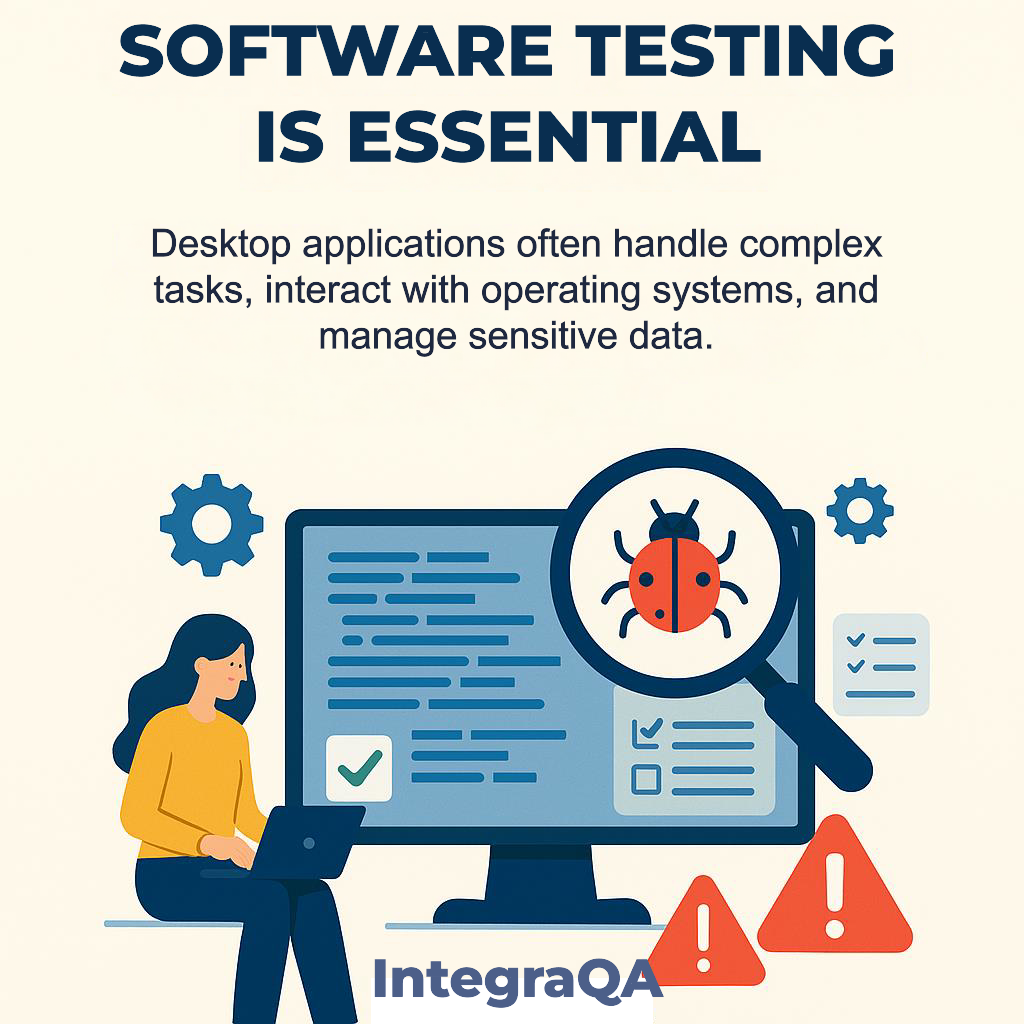
Desktop applications often handle complex tasks, interact with operating systems, and manage sensitive data. This complexity makes desktop application testing a critical step in ensuring reliability and performance. Testing validates that the software behaves as expected across different environments, configurations, and usage scenarios.
A structured testing approach includes functional validation, performance checks, usability assessment, and security evaluation. According to IntegraQA, experienced QA engineers conduct rigorous testing to ensure that every feature aligns with business requirements and delivers a seamless user experience.
Compatibility is another important factor. Desktop applications must work smoothly across various operating systems and hardware setups. Testing helps identify environment-specific issues early, preventing costly failures after deployment. By addressing these challenges proactively, businesses can deliver reliable and user-friendly software.
Understanding the Power of Automation Testing
As software systems grow more complex, manual testing alone is no longer sufficient. This is where automation testing becomes a key component of modern quality assurance. Automation uses tools and frameworks to execute test cases quickly, accurately, and repeatedly without manual intervention.
According to IntegraQA, automation enables faster testing cycles, improved accuracy, and broader test coverage, making it essential for modern development environments.
Automation is particularly effective for regression testing, where existing features must be validated after every update. It also supports continuous integration and delivery pipelines, allowing teams to detect defects early and maintain consistent quality throughout the development process.
Key Benefits of Automation Testing
Implementing Automation Testing offers several advantages:
- Faster execution of repetitive test cases
- Consistent and error-free results
- Increased coverage of complex scenarios
- Early detection of defects
- Reduced long-term testing costs
These benefits make automation a valuable investment for businesses aiming to scale efficiently while maintaining high standards.
Combining Desktop Software Testing and Automation Testing
The most effective testing strategies combine desktop software testing with automation testing. While manual testing provides human insight into usability and real-world scenarios, automation enhances speed and efficiency.
This hybrid approach ensures comprehensive coverage. Manual testing helps identify design and user experience issues, while automation handles repetitive tasks and large datasets. Together, they create a balanced and efficient testing process that delivers reliable results.
A Structured Testing Approach for Better Outcomes
A well-defined testing process is essential for achieving consistent results. At IntegraQA, every project begins with a detailed requirements review and test planning phase. This ensures that testing aligns with business objectives and covers all critical areas.
The process typically includes environment setup, test execution, defect tracking, and final validation. Transparent reporting keeps stakeholders informed, while regression testing ensures that updates do not introduce new issues. This structured approach helps businesses maintain quality throughout the development lifecycle.
Best Practices for Effective Testing
To maximize the value of desktop software testing and automation testing, businesses should follow best practices. Defining clear testing goals ensures that efforts are focused on critical workflows. A balanced mix of manual and automated testing provides optimal results.
Continuous testing should be integrated into the development lifecycle, allowing teams to identify and resolve issues early. Choosing the right tools and frameworks is also essential for achieving scalability and long-term efficiency. By adopting these practices, organizations can enhance software quality and reduce risks.
Conclusion
In today’s competitive digital landscape, delivering reliable software is essential for business success. Desktop software testing ensures that applications perform consistently across environments, while automation testing accelerates testing processes and improves accuracy. Together, they form a powerful strategy for achieving high-quality software.
With the expertise and structured approach offered by IntegraQA, businesses can confidently deliver applications that meet user expectations, reduce operational risks, and support long-term growth.