Businesses rely heavily on applications to connect with customers, deliver services, and stay competitive. Whether it is a mobile app or a web platform, users expect seamless performance, strong security, and a smooth experience. However, achieving this level of quality requires more than just development. This is where professional mobile app testing services and web application testing services play a crucial role in ensuring applications meet modern standards.
Applications today operate in complex environments. Mobile apps must function across multiple devices and operating systems, while web applications need to perform consistently across different browsers and network conditions. Without proper testing, even a small issue can lead to poor user experiences, reduced engagement, and loss of business opportunities.
Why Testing Services Are Essential
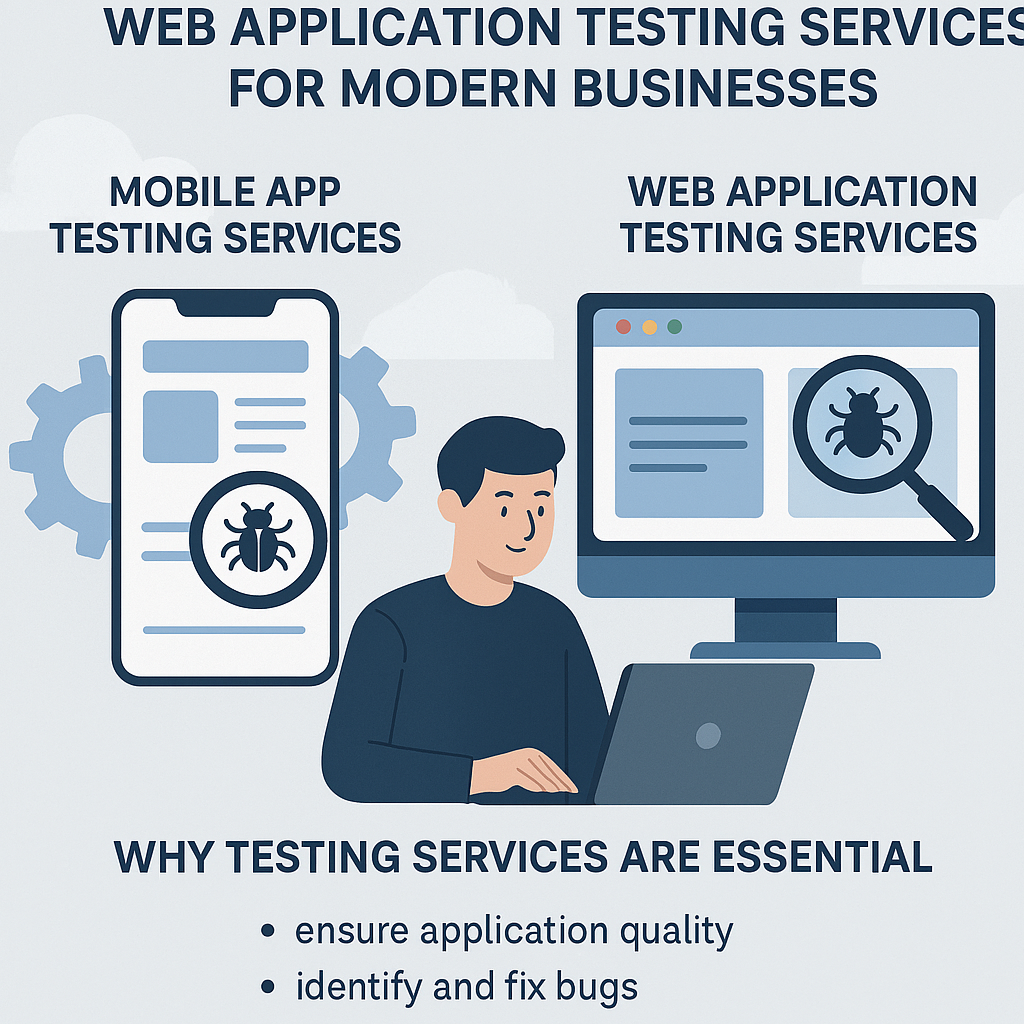
A structured approach to mobile app testing services and web application testing services ensures that applications are thoroughly evaluated before they reach users. Testing helps identify bugs, performance issues, and security vulnerabilities early in the development process. This proactive approach not only improves product quality but also reduces the cost and effort required to fix problems later.
Users today have little patience for errors. A slow-loading app or a website that crashes can quickly drive users away. By investing in professional testing services, businesses can ensure their applications deliver consistent performance and meet user expectations.
Key Components of Mobile App Testing Services
Effective mobile app testing services involve multiple layers of testing to ensure complete coverage. Each layer focuses on a specific aspect of the application.
- Functional Testing: Ensures all features work correctly
- Performance Testing: Evaluates speed and stability under different conditions
- Usability Testing: Focuses on user experience and navigation
- Security Testing: Protects sensitive user data from threats
- Compatibility Testing: Verifies performance across devices and operating systems
By combining these testing methods, businesses can deliver mobile applications that perform reliably in real-world scenarios.
Core Elements of Web Application Testing Services
Just like mobile apps, web platforms require thorough evaluation. Web application testing services focus on ensuring that websites and web-based applications function smoothly across different environments.
Key testing areas include browser compatibility, responsiveness, load performance, and security. Functional testing ensures that all features work as intended, while performance testing checks how the application behaves under heavy traffic. Security testing is especially important for protecting user data and maintaining trust.
By implementing comprehensive web application testing services, businesses can ensure their web platforms are stable, secure, and user-friendly.
The Role of Automation in Testing
Automation is transforming how mobile and web application testing services are delivered. Automated tools help execute repetitive test cases quickly and accurately, reducing manual effort and increasing efficiency.
Automation is particularly useful for regression testing, where updates need to be tested repeatedly. It also supports continuous integration, allowing teams to identify issues early and maintain consistent performance. While automation improves speed and accuracy, manual testing remains essential for evaluating usability and overall user experience.
Benefits of Professional Testing Services
Investing in expert mobile app testing services and web application testing services provides several advantages:
- Improved Quality: Ensures applications are free from major defects
- Better User Experience: Delivers smooth and reliable performance
- Cost Efficiency: Identifies issues early, reducing long-term expenses
- Enhanced Security: Protects applications from potential threats
- Faster Deployment: Speeds up release cycles without compromising quality
These benefits highlight the importance of integrating testing into every stage of development.
Best Practices for Effective Testing
To maximize the effectiveness of mobile and web application testing services, businesses should follow best practices. Defining clear testing goals helps teams stay focused and aligned with business objectives. A combination of manual and automated testing ensures comprehensive coverage.
Testing should be conducted across multiple devices, browsers, and network conditions to simulate real-world usage. Continuous testing throughout the development lifecycle helps identify and resolve issues early, leading to better results and faster delivery.
Conclusion
Delivering dependable digital products requires more than great design and development it demands consistent validation at every stage. By leveraging expert mobile app testing services and web application testing services, businesses can confidently launch applications that perform reliably under real-world conditions. A strong testing strategy not only minimizes risks but also enhances user trust and long-term engagement. In an environment where user expectations continue to rise, prioritizing quality assurance ensures your applications remain competitive, scalable, and ready for future growth.